Our Projects
GGVL
ECCV 2026

From Gaze to Meaning: A Training-Free
AI Agent for Unified Grounding and Explanation

1Centre for Vision, Speech and Signal Processing, University of Surrey, UK
2Institute for People-Centered AI, University of Surrey, UK
* Corresponding authors

These GTA game videos are included only as a fun visual demonstration of gaze annotation. They are not used in the paper, training, evaluation, datasets, or reported results.

Abstract

Understanding human attention is fundamental for scene interpretation, yet existing approaches often rely on heavily trained models that lack interpretability. Prior methods struggle to jointly reason about gaze targets, attended objects, and visual grounding without extensive supervision.

To the best of our knowledge, this work introduces the first training-free Gaze Target Agent (GTA) for gaze-guided reasoning across tasks such as gaze target prediction, attention localization, and object identification. This is achieved by leveraging pretrained vision language models, augmenting them with visually guided prompts, and employing a memory-based retrieval strategy for high-uncertainty samples to improve performance without additional training.

We evaluate our approach using both quantitative metrics and qualitative results. Quantitatively, our method achieves state of the art performance on the GazeFollow and GazeHOI benchmarks. Qualitatively, our agent provides detailed semantic predictions, predicts the correct targets even when ground truth labels are wrong, and remains flexible without vocabulary constraints.

Architecture Overview

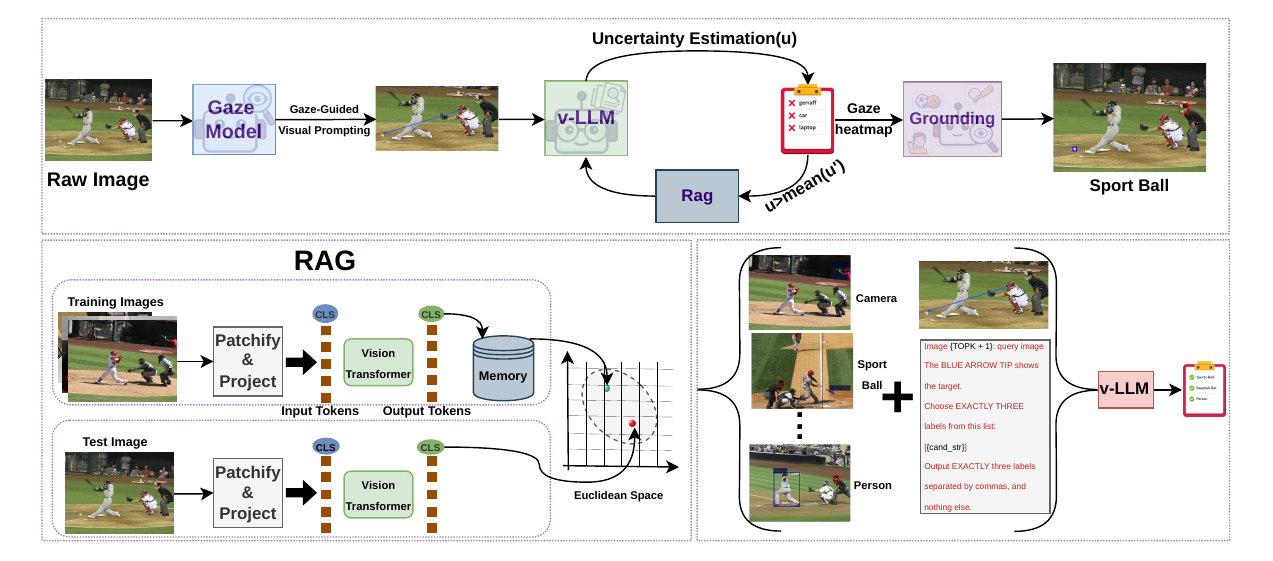
GTA Architecture

GTA is a fully training-free agent that chains three pretrained components: (1) a gaze estimator that converts each person's line of sight into a visual arrow overlay, (2) a vision-language model that reads these overlays to name the attended object, and (3) an uncertainty-aware RAG module that retrieves similar training examples from memory whenever the VLM is unsure, sharpening predictions without updating any parameters. A dedicated grounding stage then localises the predicted object in the image using spatial overlap with the predicted gaze heatmap.
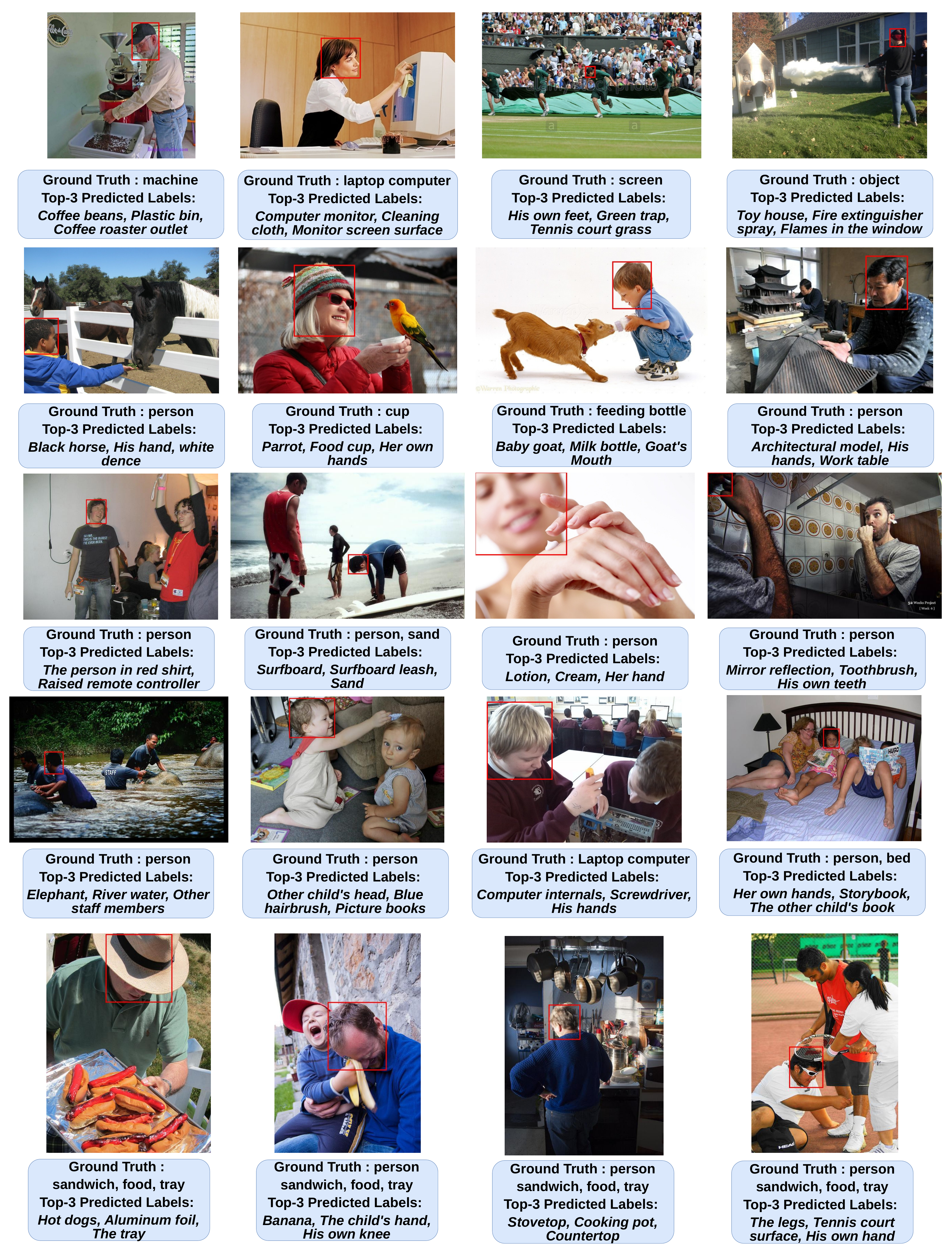
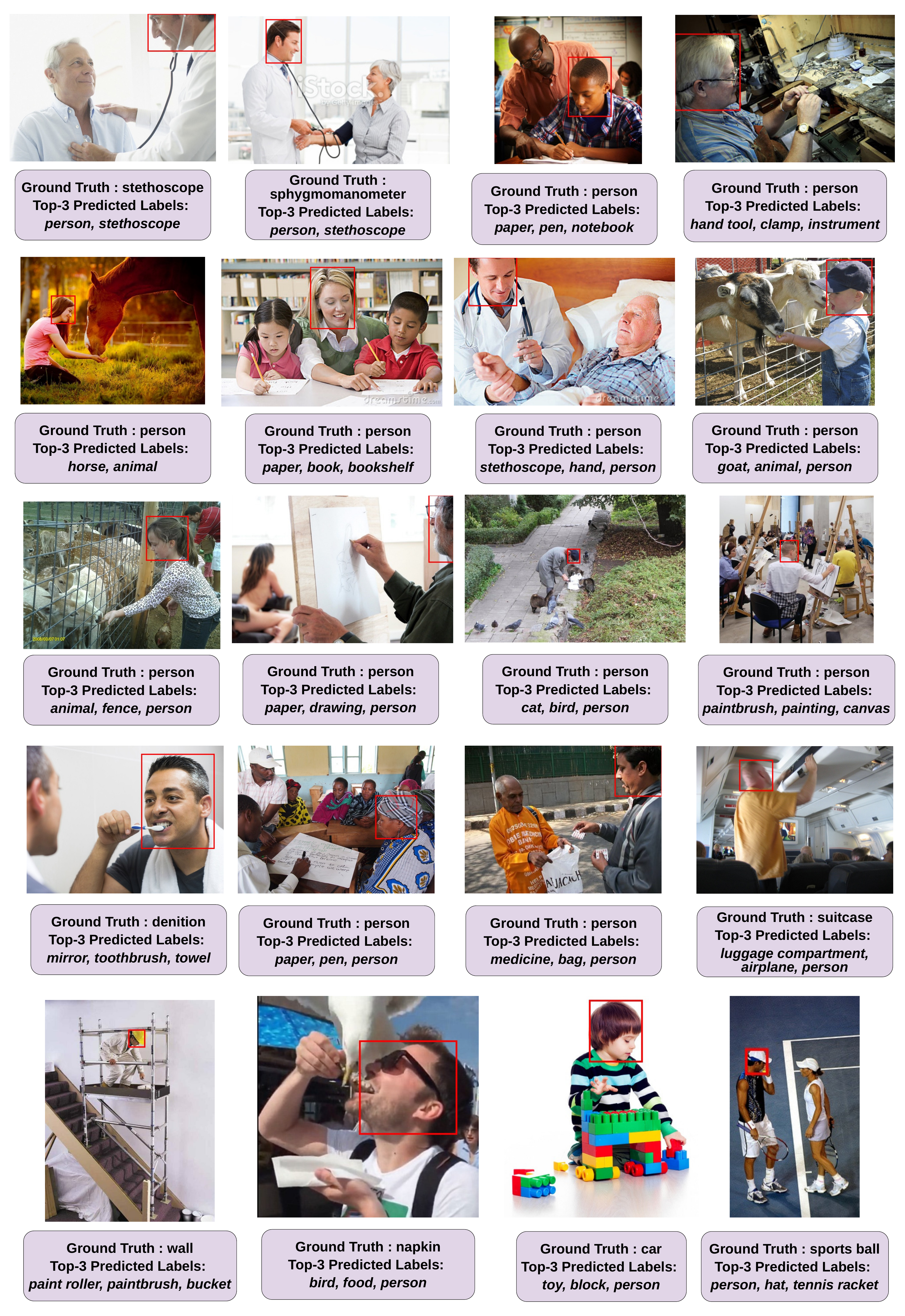
State-of-the-Art Comparison

GTA outperforms prior method on both benchmarks with zero learnable parameters.

What GTA Can Do

Cite This Work

If you find GTA useful in your research, please cite our paper:

@inproceedings{nasiriboukani2026gta,
  author    = {Nasiriboukani, Shayan and Atito, Sara and
               Nezamipour, Mohammad and Awais, Muhammad},
  title     = {From Gaze to Meaning: A Training-Free AI Agent
               for Unified Grounding and Explanation},
  booktitle = {European Conference on Computer Vision (ECCV)},
  year      = {2026},
}